Graham Van Goffrier
Postdoctoral research fellow, University of Southampton
|
As a member of the Cambridge-Southampton Quantum Algorithms for Quantum Field Theory initiative, I develop specialized quantum algorithms for the simulation of quantum physical systems, such as lattice gauge theories and quantum link models. In particular, I am working to accelerate variational and other state-preparation algorithms by taking advantage of physical symmetries. Other significant research interests of mine include particle theory beyond the Standard Model, effective nuclear theories, extreme QCD, and applied geometry/statistics.
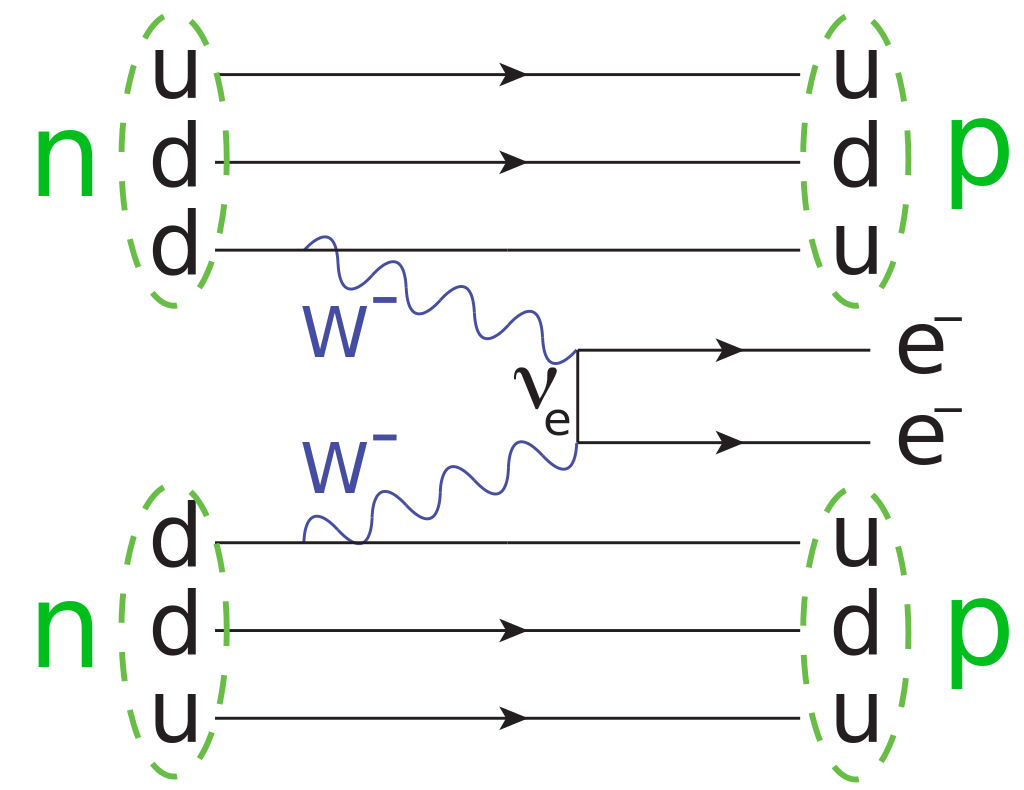
In 2023, I defended my PhD thesis at University College London, entitled "Nuclear and Particle Physics Aspects of Neutrinoless Double-Beta Decay". In the past, I have interned at Spotify focusing on causal inference, at the UK Atomic Energy Authority focusing on machine learning, and at the Department of Engineering, Cambridge, focusing on positive-definite matrix data. I value community outreach highly, and served for four years as the Postgraduate Research Representative to the Faculty of Mathematics and Physical Sciences at UCL -- as well as numerous leadership roles in student professional societies. |
"Towards the phase diagram of fermions coupled with SO(3) quantum links in (2 + 1)−D"Quantum link models (QLMs) are generalizations of Wilson’s lattice gauge theory formulated with finite-dimensional link Hilbert spaces, and therefore well-suited for quantum simulation. We construct the gauge-invariant state space for the SO(3) QLM coupled to adjoint fermionic matter to (2 + 1)-D dimensions for the first time, and study the single-plaquette ground state via exact-diagonalisation. We provide indications of a rich phase diagram which shows both spontaneous and explicit chiral symmetry breaking, confinement, and distinct magnetic phases.
|
"An Improved Precision Calculation of the 0νββ Contact Term within Chiral EFT"This work aims to improve the estimation within chiral effective field theory of the so-called "contact term'' for neutrinoless double-beta decay (0νββ), a short-range two-nucleon effect which is unaccounted for in traditional nuclear approaches. We perform an extension to a class of subleading inelastic intermediate states, delivering an updated figure for the contact coefficient (g_v^NN = 1.4(3) at μ=m_π) with uncertainty reduced by half. Such ab initio nuclear results, especially with enhanced precision, will help to resolve disagreements between estimates of 0νββ from different many-body methods.
|
"Probing the Mechanism of Neutrinoless Double-Beta Decay in Multiple Isotopes"We demonstrate how long-range and exotic short-range contributions to neutrinoless double-beta decay (0νββ) may be distinguished by combining measurements of the decay half-life across isotopes. Considering the correlated uncertainties on 0νββ nuclear matrix elements in a global Bayesian analysis, we assess the consequences of future reductions in uncertainties. Our work motivates an experimental program measuring 0νββ in more than one isotope, breaking parameter degeneracies and advancing our understanding of BSM particle physics.
|